

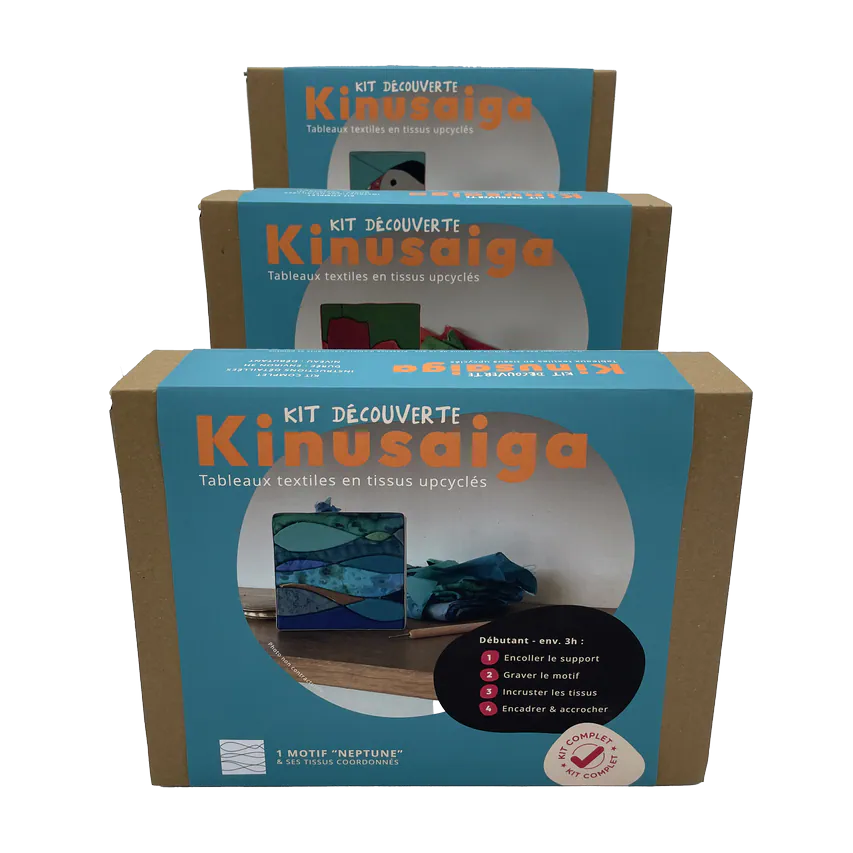
Your 3 hours, step by step
-
Glue the board
you lay the adhesive on the support board.
-
Engrave the pattern
you score the grooves of the design with the fabric-tucking tool.
-
Inlay the fabric
you cut each piece and tuck its edges into the grooves.
-
Ribbon finish
you trim the edge.
-
Stick the back on
the cardboard backing and its hanger, and up it goes.
It's called Kinusaiga, it comes from Japan, and almost everything written about it is wrong. I checked.
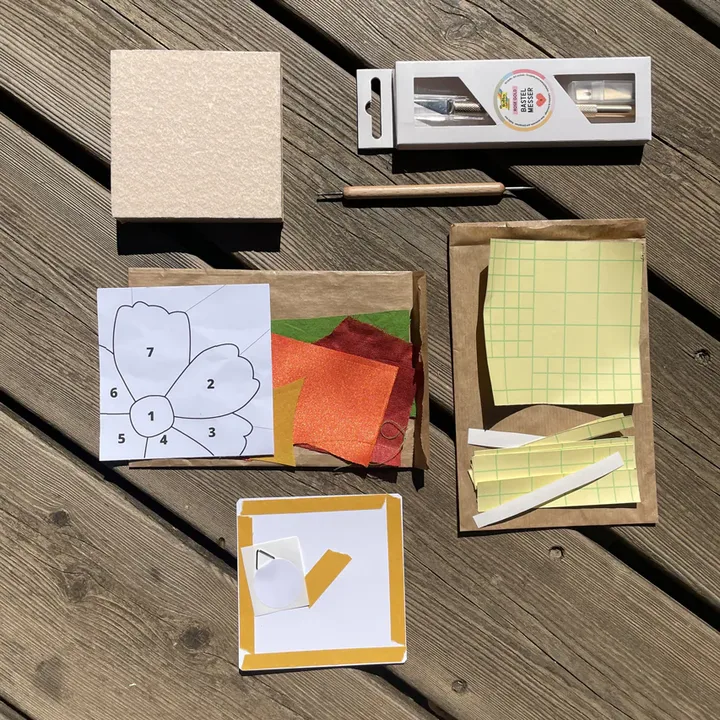
In the box
- The 10 × 10 cm extruded polystyrene support board, its adhesives and the backing with hanger
- The pattern you'll use as a template
- Fabrics matched to the pattern, with the ribbon for the edge
- The double-ended fabric-tucking tool, wood and metal
- The precision cutter, all metal, made in Germany
- The instructions and the step-by-step video tutorial (both in French), via QR code
Bring your own: a pair of scissors.
Choose your pattern
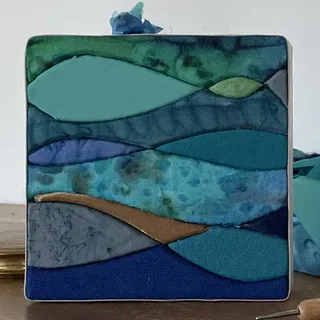
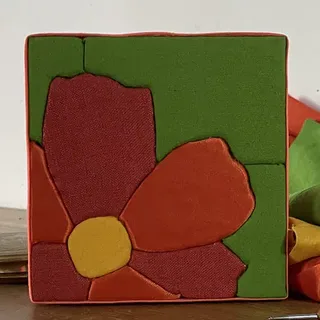
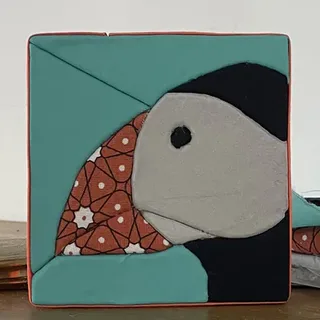
€34.90 Choose my kit (new tab)
Ships within 24 hours, shipping from €4.90.
The fabrics vary slightly from one kit to the next: the photo shows the intention, not the exact fabrics. Why?
Finished your first one already?
With the Refill Kit (new tab), the base is €12.90, and the pattern and its fabrics are à la carte.
For you or as a gift
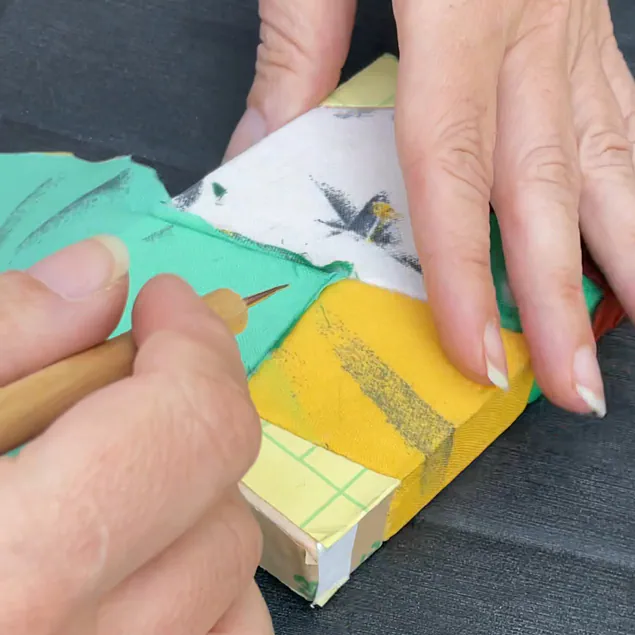
For you
Three hours with busy hands and a quiet mind. It's slow and precise, and that's exactly what makes Kinusaiga soothing: you can't rush it.
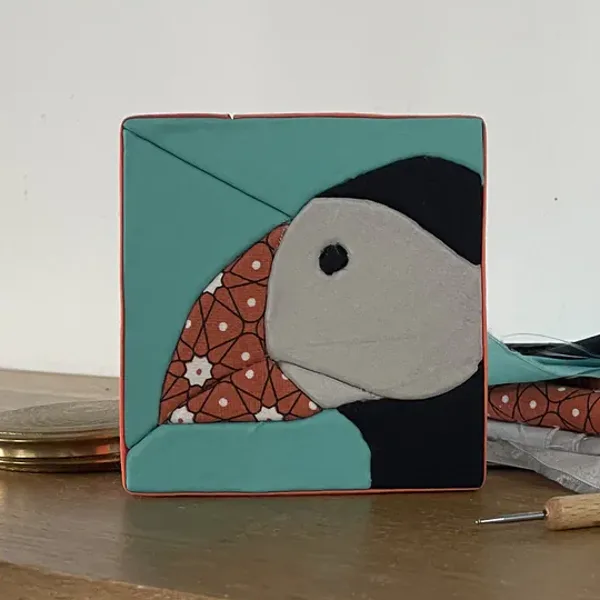
As a gift
A kit is a gift you open twice: first the box, then the finished picture.
Their first pictures
Feedback from my workshops, in their own words (in French).
« J'ai adoré découvrir un art que je ne connaissais pas encore (…) Partie préféré : découvrir le résultat fur et à mesure (…) »
« Pour ma part j'ai passé une très bonne soirée, concentrée sur l'activité, et très contente du résultat. (…) Merci beaucoup Marie pour cette découverte ! »
« Super moment créatif jeudi soir pour moi aussi ! (…) Et très heureuse de cette petite production. »
My commitments
-
Upcycled fabrics
Offcuts from my own creations (never from bespoke orders) and dormant stock.
-
Tools that last
Carefully sourced, in wood and metal: they'll serve you for a long time, and not just for Kinusaiga.
-
Someone on the other end
Stuck on a step? Write to me, I'll get back to you.
Workshops
Together, around a table, for 2.5 hours.
I provide everything, with six patterns to choose from, prepared in advance, and you can bring your own fabric. Six people maximum.
€40
per person,
snack on the house
A workshop just for your group? Hen party, new baby, birthday, girls' night, couples, parent and child or team building: tell me what you're planning.
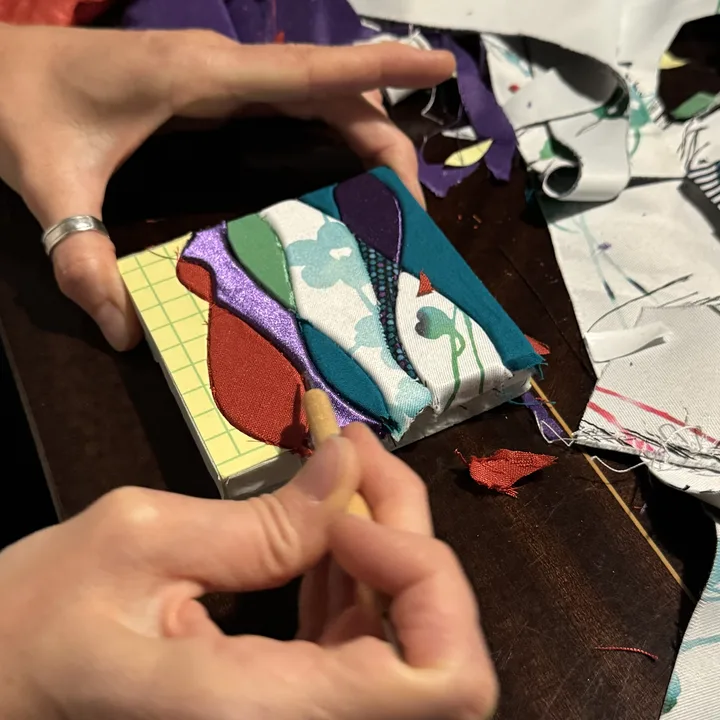
« J'ai aimé pouvoir choisir mon tissus, le toucher ( côté sensorielle chouette ) et laisser aller ma créativité. La musique ma plu aussi, j'ai été focus et c'était agréable. (…) Et de voir aussi les créations des autres se former quand je sortais de ma bulle, ça me créait une belle surprise 🥰 »
« J'ai apprécié les explications du début sur la technique, le plaisir de choisir les tissus, l'ambiance du petit groupe et le fond musical. »
« Ma partie préférée : l’ambiance et ta disponibilité 👌 »
Next dates
At l'Antre des Créateurs (Facebook, new tab), in Saint-Rambert, from 7:30 to 10 pm.
- Tuesday 6 October Book (HelloAsso, new tab)
- Wednesday 21 October Book (HelloAsso, new tab)
- Wednesday 23 September Past
A question before booking? Write to me or email the shop.
Ready to hang
Not in the mood to make it yourself?
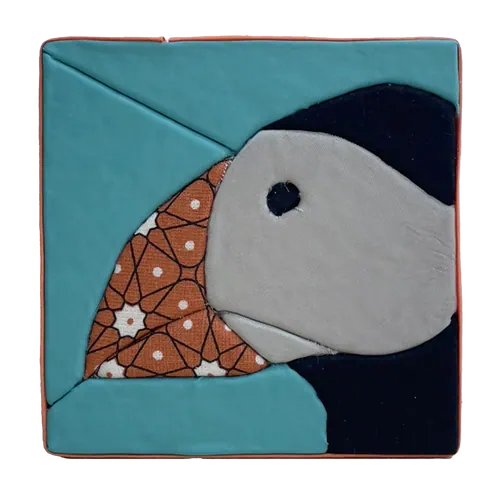
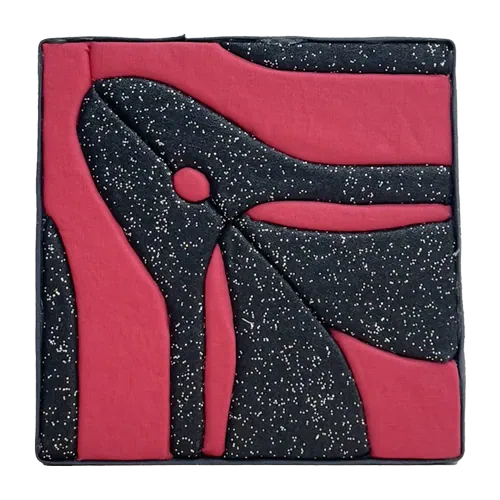
Some pictures are already made, ready to hang.
What if it were your fabric?
Your wedding dress.
Your father's shirt.
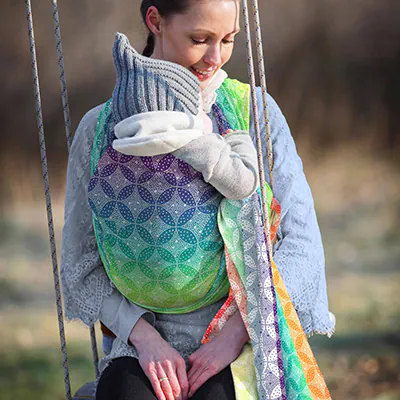
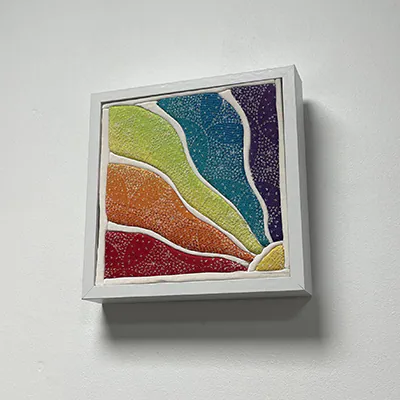
Your baby wrap.
I can turn it into a bespoke picture.
Frequently asked questions
What do I need, besides the kit?
A pair of scissors. Everything else is in the box.
I've never done this. Is that a problem?
Not at all, no experience needed: the instructions and the video tutorial (both in French) walk you through it step by step.
How long does it take?
Allow about 3 hours.
From what age?
16: the box contains sharp and pointed tools.
Will I get the fabrics from the photo?
Not exactly, and that's on purpose. The fabrics are offcuts from my own creations (never from bespoke orders) and dormant stock: they vary slightly from one kit to the next. The photo shows the intention (the colours, the mood of the pattern), not the exact fabrics you'll receive. Why? (new tab)
What about a second picture?
The Refill Kit (new tab) : the base is €12.90, and you pick the pattern à la carte, with my fabrics or yours.
Can I get a kit made just for me?
Yes! I can customise a kit, for you or for your business, your shop or your event. Tell me what you have in mind and let's talk.
Can I bring my own fabric to the workshop?
Yes!
A workshop just for my group?
Yes, on quote: tell me what you're planning.
Where to find the kits
In my shop (new tab) (French version: the kits only exist in French)
At l'Antre des Créateurs (new tab), in Saint-Just-Saint-Rambert (Loire, France)
Want to stay in the loop?
New workshop dates, new kits, ready-made pieces: leave me your address and I'll let you know. No spam: I write when I have something to announce.
You can unsubscribe at any time. To find out more, see my privacy policy (new tab).